




What is a Good Credit Score? Find Out!
Credit Score
Wondering what is a good credit score? Discover what matters for loans & financial goals. Get the facts from Broadview today!
A good credit score typically falls within the 670 to 739 range under the FICO model. Lenders view this range as acceptable risk for approving credit products. The specific score you need depends on the type of loan and the interest rate you hope to secure. Higher scores generally unlock lower interest rates and better repayment terms.
Understanding Credit Scores: Beyond the Number
A credit score is a three-digit number representing your creditworthiness based on your borrowing history. Two primary companies dominate this space: FICO and VantageScore. While both models range from 300 to 850, they weigh information differently. FICO scores are the most widely used scoring model in lending decisions, making them the standard for mortgages and auto loans.
Myth Alert: Many people search for "what is a good credit score for my age," believing that older individuals automatically hold higher scores. Age itself does not factor into the calculation. Instead, the length of your credit history contributes to your score.
A young adult with a short history can achieve a high score through consistent on-time payments and low debt utilization, while an older individual with missed payments may have a lower score.
Payment history and credit utilization make up the bulk of your score. Payment history is the most important factor in your FICO score. Paying bills on time is the single most effective way to build trust with lenders.
Credit utilization, or the ratio of your current debt to your total available credit, is the second most important factor. Keeping this ratio below 30% demonstrates that you manage borrowed money responsibly rather than relying on it for daily survival.
What's Considered a 'Good' Credit Score?
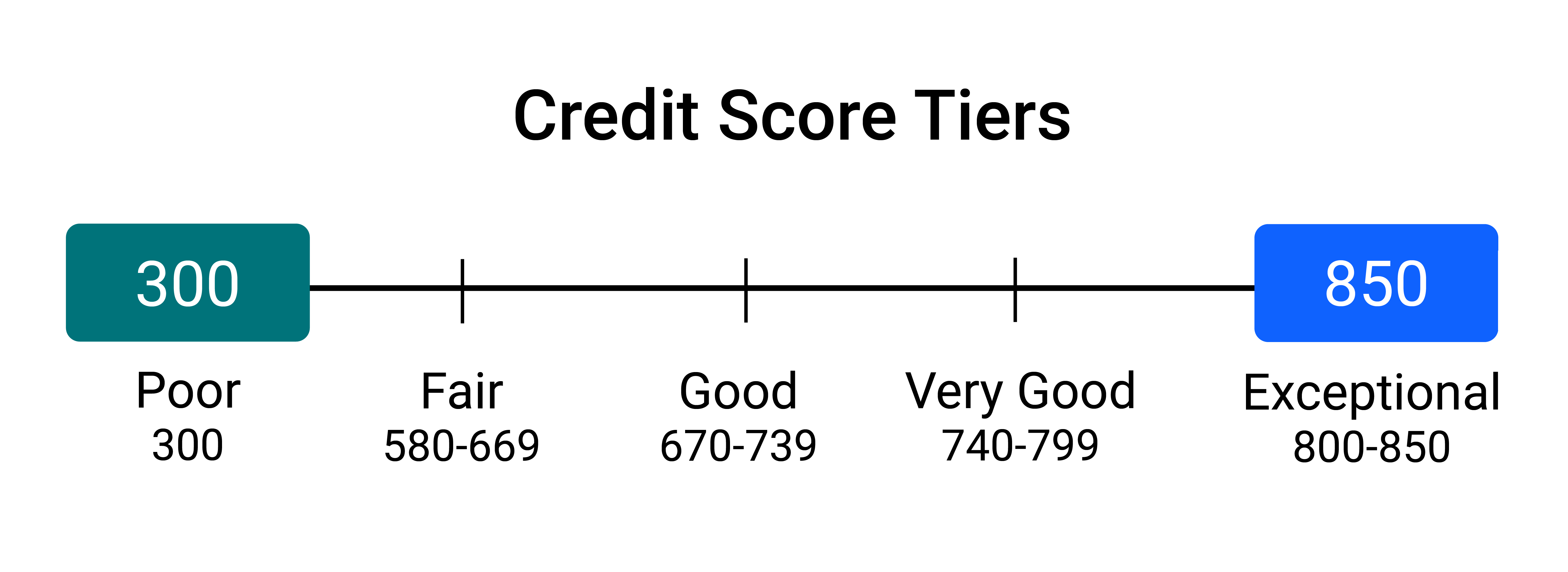
Lenders categorize scores into specific tiers. According to Experian, a score between 670 and 739 is "Good." A score from 740 to 799 is "Very Good," and 800 to 850 is "Exceptional." While you can qualify for most financial products with a good score, crossing into the Very Good or Exceptional tiers often results in significant savings over the life of a loan due to lower annual percentage rates (APR).
The definition of "good" shifts based on the asset you want to acquire. If you are asking what credit score may be needed to buy a house, conventional loans generally require at least 620. Government-backed FHA loans may accept scores as low as 580.
For an auto loan, the credit score requirements for buying a car are different: while you can get a car loan with a score in the 600s, the interest rate will likely be higher. Securing a more favorable rate typically requires a score above 720.
Similarly, determining a suitable credit score for a loan depends on the lender’s risk criteria. Broadview evaluates your entire financial picture, but a score in the "Good" range is a solid baseline for personal loan approvals.
Check Your Score: You can view your FICO score for free through many banking apps and credit card issuers. Checking your own score is a "soft inquiry" and does not hurt your rating. Reviewing your report allows you to spot errors or signs of identity theft that might be dragging down your number.
Your Credit Score and Your Financial Journey
Your credit score is a tool that helps you achieve specific life milestones. It is not a permanent judgment of your character but a reflection of your current financial habits. If your score is currently lower than you would like, you can take steps to improve it. Focus on paying down revolving debt, disputing inaccuracies on your report, and avoiding new credit applications in the months leading up to a major purchase.
Beyond home ownership, a good credit profile supports long-term financial health. It affects insurance premiums, rental applications, and even utility deposits. Maintaining a score in the "Good" range or above reduces friction across many financial transactions.
The habits that sustain a high score are the same habits that build wealth: paying obligations on time, keeping debt low relative to available credit, and reviewing reports regularly for errors.
Future Proofing: As you plan for retirement or major life changes, your credit history remains relevant. A strong score can help you refinance at lower rates, secure a reverse mortgage, or obtain favorable terms on a recreational vehicle loan. The score you build today supports decisions for decades to come.
Managing your credit is a continuous process. Whether you are working toward your first mortgage or looking to use your home equity, having a partner who understands your goals makes a difference. Broadview membership provides access to resources that help you monitor and improve your financial standing. By maintaining a score in the "Good" range or higher, you position yourself to take advantage of opportunities with favorable terms.
Key Takeaways
- A FICO score ranging from 670 to 739 is typically considered good by lenders.
- Lenders view scores within the good range as acceptable for approving credit products.
- The specific credit score required varies depending on the type of loan and the desired interest rate.
- Higher credit scores generally lead to lower interest rates and more favorable repayment terms.
Frequently Asked Questions
What is a good credit score range?
A good credit score under the FICO model typically falls between 670 and 739. Scores from 740 to 799 are considered very good, and scores of 800 or above are exceptional. Lenders view a good score as acceptable risk for most credit products.
Does age affect your credit score?
Age itself does not directly affect your credit score. However, the length of your credit history is a factor. A young adult with a short history can achieve a high score through consistent on-time payments and low credit utilization, while an older individual with missed payments may have a lower score.
What credit score do you need to buy a house?
For a conventional mortgage, you generally need a credit score of at least 620. Government-backed FHA loans may accept scores as low as 580. To qualify for the best interest rates, a score above 740 is often recommended.
Can I get a car loan with a 580 credit score?
Yes, you can get a car loan with a credit score of 580, but you will likely receive a higher interest rate. Securing a rate below 5% typically requires a score above 720. Lenders consider scores in the 600s as subprime, so terms may be less favorable.
Can I get a $50,000 loan with a 700 credit score?
A credit score of 700 is in the good range, so you may qualify for a $50,000 personal loan. Approval also depends on your income, debt-to-income ratio, and the lender's criteria. A good score improves your chances of getting favorable terms.
What credit score is needed for a $400,000 house?
The required credit score for a $400,000 house depends on the loan type. For a conventional loan, a minimum score of 620 is typical, but a higher score helps secure a lower interest rate. For an FHA loan, scores as low as 580 may be accepted.
Last reviewed: September 29, 2026
