




Does Checking Your Credit Hurt Your Score?
Credit Score
Learn how checking your credit can affect your score—and how to check without harm. Explore hard vs. soft inquiries and protect your credit.
It's a common worry: does the very act of checking your credit score or report negatively impact your financial health? Many people hesitate to review their credit standing, fearing they might inadvertently damage it.
This anxiety often stems from a misunderstanding of how credit checks work and the different types of inquiries that can appear on your credit report. Understanding these distinctions is key to managing your credit confidently and taking proactive steps toward your financial goals.
At Broadview, we believe in empowering you with clear, straightforward information. We want to demystify the process of credit checks so you can monitor your financial well-being without hesitation. Let's explore what really happens when you or a lender looks at your credit information and how it truly affects your score.
Checking Your Own Credit: The Myth That Won't Go Away
The persistent myth that checking your own credit score will lower it is a significant barrier for many. Fortunately, this is largely untrue. Your credit reports and scores are designed to be accessed and monitored by you without penalty.
The key difference lies in who is initiating the check and why. When you engage in self-monitoring, you are typically performing a "soft inquiry," which is a routine check that lenders do not see and that has absolutely no negative effect on your credit score.
These soft inquiries are essential for your financial awareness, allowing you to track progress, identify potential issues, and stay informed about your credit health.
In contrast, "hard inquiries" occur when a financial institution, like a bank or credit card company, checks your credit report because you have applied for new credit. This could be for a loan, a new credit card, or even some rental applications. Lenders use these hard inquiries as one factor to assess your creditworthiness.
While a single hard inquiry has a minimal impact, a pattern of numerous hard inquiries in a short period can signal to lenders that you may be taking on too much debt, potentially lowering your score. It's important to distinguish between these two types to understand how your credit is being accessed.
| Feature | Soft Inquiry | Hard Inquiry |
|---|---|---|
| Definition | A review of your credit report that doesn't result from a specific application for new credit. | A review of your credit report that occurs when you apply for new credit. |
| Examples | Checking your own credit score or report, pre-approved credit card offers, background checks by potential employers (with permission), existing creditor account reviews. | Applying for a mortgage, auto loan, student loan, personal loan, or new credit card. |
| Score Impact | None. These are not visible to lenders and do not affect your score. | Minor, temporary impact (typically fewer than 5 points). Multiple hard inquiries in a short period can have a more significant effect. |
| Duration on Report | Typically not listed or visible to lenders. | Visible on your credit report for up to 2 years. Affects FICO Scores for up to 12 months. |
How a Single Hard Inquiry Affects Your Credit Score
While the fear of checking your credit is often tied to the impact of hard inquiries, it's important to understand that a single hard inquiry typically has a very minor and temporary effect on your credit score.
Financial experts, including myFICO, note that a single hard inquiry typically lowers a FICO Score by fewer than 5 points for most consumers. Hard inquiries remain on your credit report for up to two years, although FICO scoring models generally consider them only during the first 12 months.
This temporary scoring impact reflects the modest risk associated with seeking new credit.
An important exception applies when shopping for certain types of loans. FICO scoring models recognize that consumers often compare offers from multiple lenders when seeking a mortgage, auto loan, or student loan. As a result, multiple inquiries for the same type of loan made within a rate-shopping window are generally treated as a single inquiry for scoring purposes.
Depending on the FICO model used, the rate-shopping window is typically 14 to 45 days. This allows consumers to compare financing offers without significantly harming their credit scores.
For example, if you apply with several auto lenders during a two-week period while shopping for a car loan, those inquiries will likely be counted as a single inquiry by FICO scoring models.
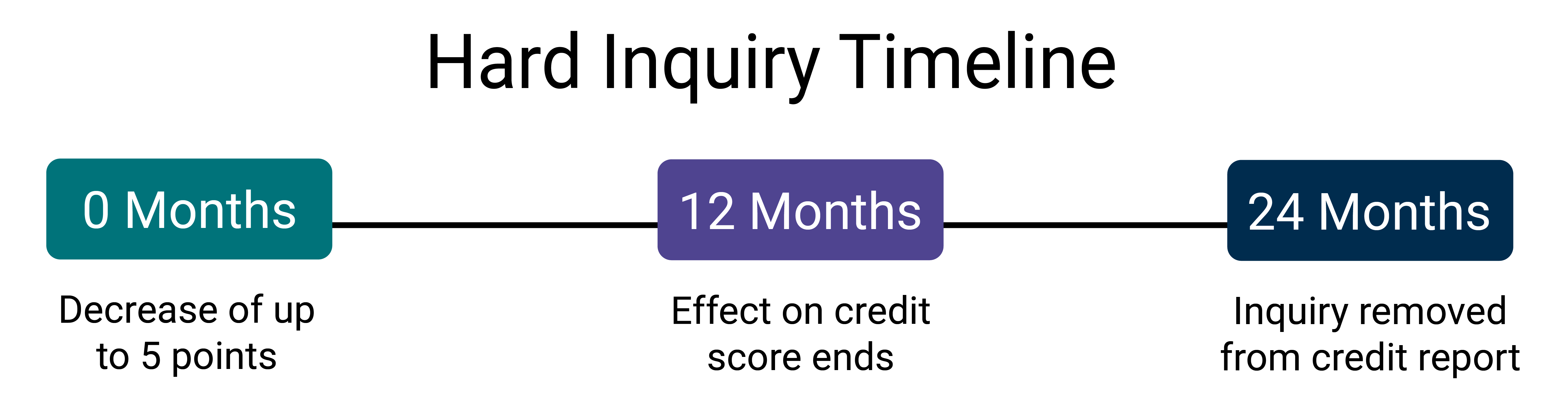
Key takeaway: A single hard inquiry is a minor, temporary factor when it comes to your credit score.
Rate Shopping Window by Loan Type:
-
- Mortgages: Typically 14-45 days
- Auto Loans: Typically 14-45 days
- Student Loans: Typically 14-45 days
Where to Check Your Credit for Free (Without Any Penalty)
Now that you understand the difference between soft and hard inquiries, the next step is knowing where to access your credit safely. Multiple free resources let you monitor your reports and scores without triggering a hard inquiry.
This means you can stay informed about your credit standing without any anxiety about how checking credit hurt score could impact your financial health. With these tools, reviewing your credit becomes a routine part of managing your finances, much like checking your bank account balance or reviewing your monthly budget.
AnnualCreditReport.com for Weekly Free Credit Reports
The Consumer Financial Protection Bureau (CFPB) directs consumers to AnnualCreditReport.com as the only federally authorized source for free credit reports. While federal law originally provided one free report per year from each bureau, this program now offers free weekly access.
You can request your report from Equifax, Experian, or TransUnion every seven days without any cost or penalty. These reports contain your full credit history, including account details, payment records, inquiries, and public records.
Reviewing them regularly helps you catch errors, detect fraud, and maintain accurate credit data. Since this service is mandated by federal law, it is completely risk-free and has no effect on your score.
You can stagger your requests by pulling a report from a different bureau each week to maintain ongoing visibility throughout the year.
Credit Monitoring Services and Credit Card Issuer Tools
Beyond the official federal program, many financial institutions and credit card companies provide free credit score access as a member benefit. These services use soft inquiries to deliver your FICO Score or VantageScore, so checking them never lowers your score. Some offer monitoring alerts that notify you of changes to your credit report, such as new accounts, address updates, or inquiries you did not initiate.
Using these resources consistently builds a habit of credit awareness that strengthens your financial decision-making over time. Many credit card issuers now include free monthly score updates directly in their mobile apps, making it easier than ever to track your progress.
How to Check Your Credit Score Without Hurting It
Follow these steps to safely access your credit information using only soft inquiries that leave your score untouched.
- Visit AnnualCreditReport.com. This federally authorized site provides free weekly credit reports from all three bureaus. Request your reports and review them carefully for errors or unfamiliar activity.
- Set up accounts with each bureau. Creating accounts at Equifax, Experian, and TransUnion allows you to access your reports anytime and monitor for changes between scheduled requests.
- Use your credit card issuer's free score tool. Many card issuers provide monthly FICO or VantageScore updates through their app or website without charge. These updates use soft inquiries and carry no risk.
- Enroll in a free credit monitoring service. Several reputable services track your credit and send alerts about significant changes, helping you respond quickly to potential fraud or identity theft.
- Schedule regular check-ins. Set a monthly or quarterly reminder to review your credit health alongside other financial tasks like budgeting and bill paying. Consistency makes credit management feel natural rather than intimidating.
These steps use only soft inquiries, meaning your score remains unaffected each time you check. Regular monitoring empowers you to maintain accurate credit data, spot issues early, and make informed decisions about major financial moves.
When Monitoring Your Credit Helps More Than Hurts
Understanding how to check your credit without negative consequences is the first step. The next is recognizing that consistently monitoring your credit is not just safe. It's a powerful habit that benefits your financial journey.
Many people shy away from regular credit checks, perhaps still believing the myth that how checking credit hurt score could be a real threat. However, embracing credit monitoring transforms it from a potential worry into a proactive tool for financial well-being.
It’s about shifting your perspective from fear to empowerment, using the information available to make smarter, more confident decisions about your money and future goals.
Catching Errors and Unauthorized Activity Early
Your credit report is a detailed record of your financial behavior. It lists all your credit accounts, payment history, credit limits, and public records. Because it's so comprehensive, errors can sometimes occur, whether it's a transposed number, a late payment incorrectly reported, or an account that doesn't belong to you.
Regularly reviewing your credit report, which you can do weekly for free via AnnualCreditReport.com, allows you to spot these discrepancies quickly. Catching an error early can prevent it from negatively impacting your score or leading to further complications.
Similarly, unauthorized activity, such as new accounts opened in your name or fraudulent credit inquiries, can be detected through diligent monitoring. Early detection of fraud is critical for limiting damage and protecting your identity. This proactive approach ensures your credit report accurately reflects your financial life.
The ability to identify and dispute inaccuracies or signs of identity theft is a primary benefit of consistent credit monitoring. When you notice an incorrect entry or a suspicious account, you can contact the credit bureau and the creditor involved to initiate a dispute.
The Fair Credit Reporting Act (FCRA) gives you the right to have errors investigated and corrected. For instance, if you see a credit card account on your report that you never opened, reporting it immediately to the credit bureaus is the first step in resolving potential identity theft.
This vigilance is far more beneficial than simply waiting for a loan application to be denied due to an erroneous mark on your report. By making credit review a regular practice, you are essentially performing a vital health check on your financial standing, much like a doctor’s visit for your physical health.
Building a Habit of Credit Awareness Without Penalty
Transforming credit monitoring into a regular habit is about building financial confidence. When you know you can check your credit status. Whether it's your score or report details.
Without any negative repercussions, it becomes a natural part of your financial routine. This habit fosters a deeper understanding of how your financial decisions impact your creditworthiness over time.
You can track the positive effects of paying bills on time, managing credit utilization responsibly, and understanding the minimal impact of soft inquiries.
This ongoing awareness helps you make informed choices, whether you’re planning for a major purchase like a Home Equity Line of Credit or simply aiming to improve your financial health.
Developing this habit empowers you to stay ahead of potential issues and celebrate your progress. It’s about demystifying credit and making it an accessible tool for achieving your life goals.
By leveraging free resources like AnnualCreditReport.com and credit monitoring tools offered by financial institutions, you can integrate credit awareness into your monthly financial check-ins.
This consistent engagement ensures you are always informed and in control, making complex financial concepts feel manageable and less intimidating. It’s a sustainable approach to financial wellness that aligns with Broadview’s commitment to guiding you every step of the way.
Common Myths About Self-Checking and Credit Score Drops
Myth: Checking your own credit score will lower it.
Fact: Soft inquiries, which are used when you check your own credit score or report, do not affect your credit score. These are invisible to lenders and carry no penalty. Only hard inquiries, initiated by lenders when you apply for credit, can have a minor impact.
Myth: All credit inquiries are the same and hurt your score.
Fact: There are two types: soft and hard inquiries. While hard inquiries can slightly lower your score temporarily, soft inquiries have zero impact. It's important to distinguish between them to understand how checking credit hurt score is often misunderstood.
Myth: You can only check your credit report once a year.
Fact: Due to recent program expansions, you can now access your full credit reports from Equifax, Experian, and TransUnion for free *weekly* at AnnualCreditReport.com. This allows for much more frequent monitoring without consequence.
Myth: If a hard inquiry happens, your score will drop significantly.
Fact: A single hard inquiry typically reduces your FICO Score by fewer than 5 points. While multiple inquiries in a short period can have a greater effect, the impact of one is minor and temporary, especially for rate shopping within specific windows for mortgages or auto loans.
Myth: Credit monitoring services are expensive and might hurt your score.
Fact: Many credit card issuers and financial institutions offer free credit score monitoring as a member benefit, using soft inquiries. Reputable services also provide alerts without negatively impacting your credit standing.
This blog is for general informational and educational purposes only and is not intended as financial, legal, or tax advice.
Key Takeaways
- Checking your own credit score or report is a soft inquiry and does not harm your credit.
- Only hard inquiries, such as those from lenders when you apply for credit, can have a minor temporary impact.
- Understanding the difference between soft and hard inquiries helps you monitor your credit without fear.
- Regularly reviewing your credit can help you spot errors and improve your financial health.
- You can check your credit as often as you like without penalty.
Frequently Asked Questions
Does checking your own credit score hurt your credit score?
Checking your own credit score does not hurt your credit score. This type of check is a soft inquiry, which lenders do not see and has no negative effect on your score. You can monitor your credit as often as you like without any penalty.
Why would checking your credit score hurt your credit score?
Checking your credit score does not hurt your credit score, but many people mistakenly believe it does because they confuse soft inquiries with hard inquiries. A hard inquiry happens only when a lender checks your credit after you apply for new credit, and that has a minor temporary impact.
What is the difference between a soft inquiry and a hard inquiry?
A soft inquiry is a routine credit check that does not affect your score, such as when you check your own credit or receive a pre-approved offer. A hard inquiry occurs when a financial institution checks your credit because you applied for a loan or credit card, and it may lower your score by a few points temporarily.
How much does a hard inquiry affect your credit score?
A single hard inquiry typically reduces your FICO score by fewer than 5 points. This minor effect lasts up to 12 months, though the inquiry remains on your report for two years. Multiple hard inquiries in a short period can have a larger impact.
Does rate shopping for a mortgage or auto loan hurt your credit score?
Rate shopping for a mortgage, auto loan, or student loan does not significantly hurt your credit score. Credit scoring models treat multiple inquiries for the same loan type within 14 to 45 days as a single inquiry, allowing you to compare offers without penalty.
Where can you check your credit for free without hurting your score?
You can check your credit for free at AnnualCreditReport.com, which offers weekly reports from Equifax, Experian, and TransUnion. These are soft inquiries and have no impact on your score. Many other services also provide free credit monitoring through soft inquiries.
Last reviewed: October 19, 2026 by the Broadview Team
